
Marrakech has one of the most distinctive food cultures in the world — and one of the most varied restaurant scenes in North Africa. From street food eaten standing up in the Djemaa el-Fna to rooftop fine dining with views across the medina, the city offers every conceivable eating experience. The challenge, for first-time visitors especially, is knowing where to go.
This guide covers the best restaurants in Marrakech across different categories — traditional Moroccan cuisine, international dining, rooftop experiences and evening entertainment — with honest recommendations based on quality, atmosphere and value.
What Makes Marrakech’s Restaurant Scene Unique
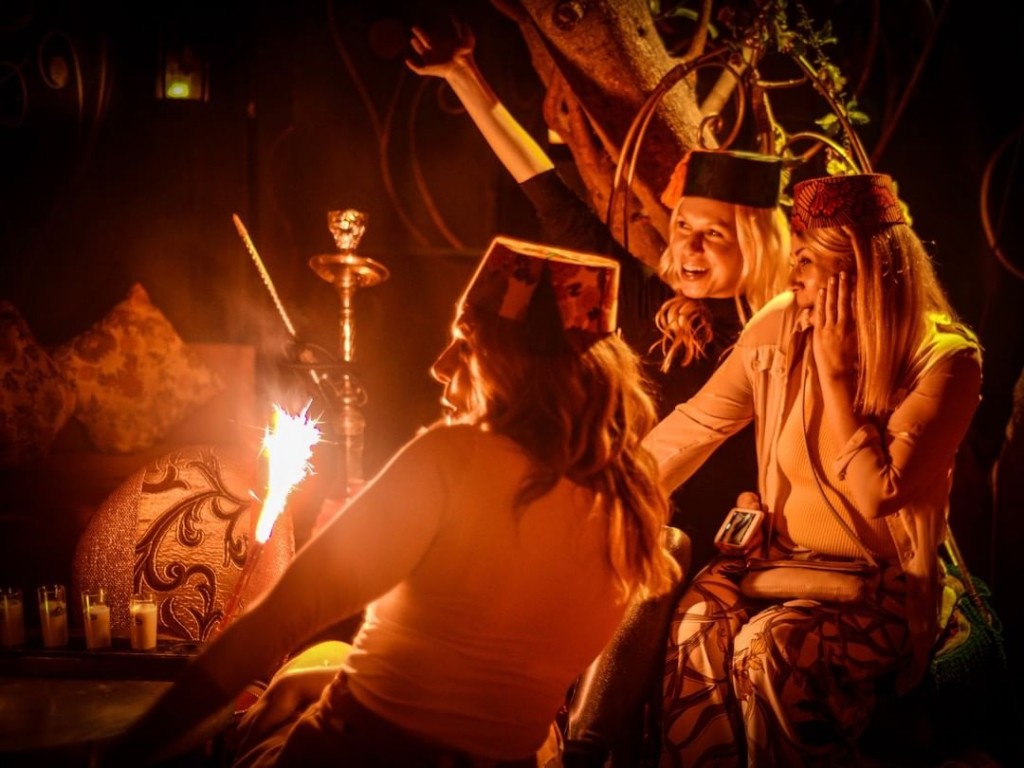
Dining in Marrakech is rarely just about the food. The setting, the service, the music, the architecture — these elements are as important as what arrives on the plate. The best restaurants in the city understand this instinctively, offering experiences that are theatrical, sensory and deeply rooted in Moroccan culture.
The city’s restaurant geography broadly divides into three zones: the medina, where the most atmospheric and traditional establishments are found; Gueliz (the Ville Nouvelle), home to the most contemporary and international restaurants; and the Hivernage district, which houses the grandest dinner and entertainment venues.
Each zone has its own character, and the best Marrakech dining itinerary will take in all three.
For a Complete Evening Experience: Comptoir Darna
If you are looking for one restaurant in Marrakech that captures everything the city has to offer — gastronomy, atmosphere, live entertainment and theatre — Comptoir Darna is the answer.
Established in 1999 on Avenue Echouhada in the prestigious Hivernage district, Comptoir Darna has become one of the most celebrated and enduring restaurants in Marrakech. With a rating of 4.7 out of 5 across more than 14,000 Google reviews and a Travellers’ Choice 2025 award from TripAdvisor, its reputation is not manufactured — it is earned nightly.
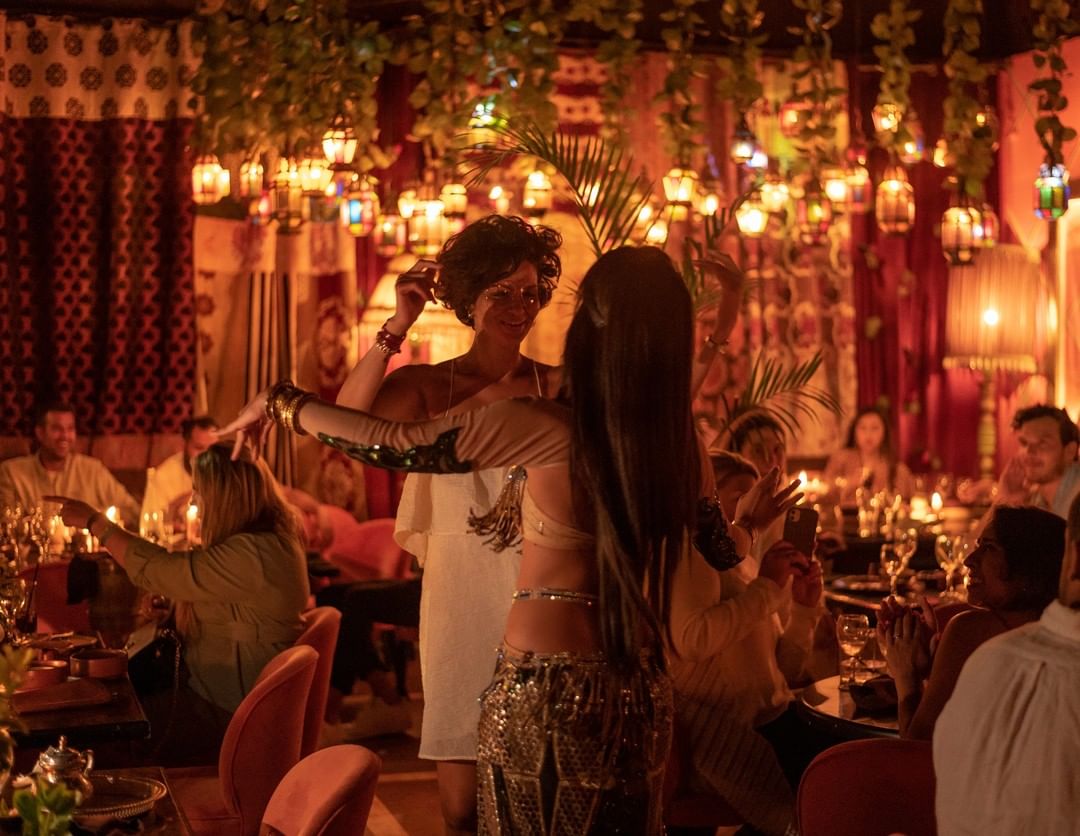
The setting alone justifies the visit. The restaurant occupies a beautifully restored riad-style building, with a main dining room of extraordinary richness — carved woodwork, lanterns, deep-coloured textiles and an atmosphere that shifts as the evening progresses from elegant dinner to spectacular entertainment. The terrace invites dining under the stars; the patio offers a quieter, more intimate setting; the club welcomes those who want the evening to continue well into the night.
The menu moves fluently between Moroccan classics and international cuisine. The pastilla — Morocco’s famous flaky pastry parcel of pigeon, almonds and spiced egg, dusted with icing sugar and cinnamon — is among the finest in the city. The couscous royal is a masterclass in slow-cooked tradition. The lobster ravioli represents the international side of the kitchen at its most confident. The cocktail list, with creations such as the Berry Breeze and the Smoking Oriental Old Fashioned, is one of the most inventive in Marrakech.
But it is the evening entertainment that lifts Comptoir Darna above the category of “good restaurant” and into something rarer. As the night develops, belly dancers take the floor, Gnawa musicians fill the room with hypnotic rhythm, and the resident DJ ensures the energy carries through until the early hours. It is, in the truest sense, a complete experience — and one that most visitors to Marrakech remember long after everything else has faded.
Best for: Special occasions, couples, groups, anyone who wants to experience the full Marrakech evening in a single venue.
Opening hours: Every evening from 7:00pm. Reservations strongly recommended.
Dress code: Smart casual — no sportswear, shorts or sandals for men.
For Traditional Moroccan Food: The Medina Restaurants
The medina is where Moroccan food in its most traditional form is found — and where the experience of eating is most closely tied to the architecture and atmosphere of the city’s historic heart.
Dar Yacout, in the northern medina near Bab Doukkala, is one of the grand traditional dining palaces of Marrakech. Set in a beautifully restored 16th-century mansion, it serves a fixed menu of classic Moroccan dishes — harira soup, bastilla, tagine, couscous, honey pastries — in a setting of considerable grandeur. It is formal by Marrakech standards, and prices reflect this, but for a single evening of traditional palace dining, it is hard to surpass.
Le Foundouk, near the Mouassine fountain, occupies a restored caravanserai and offers one of the most sophisticated interpretations of Moroccan-French fusion cuisine in the medina. The rooftop terrace has views over the surrounding roofscape that are exceptional at sunset.
For a more informal but equally authentic experience, the small restaurants in the side streets around the Djemaa el-Fna serve some of the best value traditional food in the city. A tagine with bread, olives and mint tea costs around 60 to 80 MAD (approximately £5) and is often indistinguishable in quality from dishes served in establishments charging five times the price.
For Rooftop Dining: Views Over the Medina
Marrakech’s rooftops are among the most atmospheric dining environments in North Africa. As the sun sets and the call to prayer rises from a dozen minarets simultaneously, eating above the city takes on a particular quality that ground-level restaurants cannot replicate.
Café des Épices, overlooking the Rahba Kedima spice market, is one of the most beloved rooftop cafés in the medina. The food is simple — salads, sandwiches, pastilla — but the views over the square below and the medina roofscape beyond are outstanding. It is at its best in the late afternoon, as the light changes and the market winds down.
Nomad, also in the medina near Rahba Kedima, takes a more sophisticated approach: a contemporary menu of Moroccan-inspired dishes with strong North African influences, served across two terrace levels with excellent views. The food is genuinely good, the service is attentive, and the wine list is one of the better ones in the medina.
For International Cuisine: Gueliz
If you are spending several days in Marrakech and want a break from Moroccan food — or simply want to experience the city’s more contemporary restaurant scene — Gueliz is the place to go.
The Ville Nouvelle district has developed a strong restaurant culture over the past decade, with a concentration of Italian, French, Japanese and fusion restaurants along and around Avenue Mohammed V and the streets nearby. Quality is generally high, prices are reasonable, and the atmosphere is markedly more relaxed than the medina.
Grand Café de la Poste, housed in a beautifully restored 1920s colonial post office building near the train station, is one of the most characterful restaurants in Gueliz. The French brasserie menu is reliable and well-executed, the wine list is excellent, and the setting — high ceilings, ceiling fans, tiled floors — captures the atmosphere of French Moroccan Marrakech at its most elegant.
For Street Food: The Djemaa el-Fna
No guide to the best restaurants in Marrakech would be complete without the Djemaa el-Fna — not because its food stalls are the finest in the city, but because eating there at night is one of the great urban food experiences in the world.
From around 7pm, the central square transforms into an enormous outdoor kitchen. Numbered stalls offer a dizzying array of grilled meats, snails in broth, sheep’s head (for the adventurous), fresh-squeezed orange juice and Moroccan pastries. The atmosphere — smoke, noise, music, colour, the press of thousands of people — makes everything taste better than it would anywhere else.
The best approach is to walk the length of the stalls first, assess what looks freshest and most active, and then take a seat. Stick to grilled meats, cooked vegetables and bread for the most reliably safe and delicious experience. The orange juice, pressed in front of you for 4 MAD a glass, is non-negotiable.
Practical Tips for Eating in Marrakech
Reservations: For high-end and popular restaurants — particularly Comptoir Darna and the major medina palaces — booking in advance is essential, especially at weekends and in peak season. Many restaurants now offer online booking.
Alcohol: Morocco is a Muslim country, and alcohol is not available everywhere. Licensed restaurants — including Comptoir Darna, Grand Café de la Poste and most Gueliz establishments — serve wine, beer and cocktails. Many traditional medina restaurants do not.
Tipping: Tipping is customary in Marrakech. Around 10% of the bill is standard in sit-down restaurants; rounding up is sufficient in cafés and street food settings.
Timing: Marrakech eats late by UK standards. Most restaurants do not fill up until 8:30 or 9pm. Arriving at 7pm will give you a quieter table and more attentive service.
Final Word
The best restaurants in Marrakech are not simply places to eat — they are places to experience the city at its most generous and alive. Whether you are sitting on a rooftop above the medina watching the sun set over the Atlas Mountains, eating a tagine in a 16th-century palace, or surrendering to an evening of music and spectacle at Comptoir Darna, food in Marrakech is always about more than the food.
Plan well, book ahead for the experiences that matter most, and leave room for the unexpected — the hole-in-the-wall restaurant down an alley you didn’t plan to enter, the mint tea that turns into an hour-long conversation. In Marrakech, the best meals are often the ones you didn’t intend to have.